
Tow trucks
Tilt tray, flatbed or hook and chain: which tow truck do you need?
Most people don't think about which tow truck they need until one is on the way. Usually any capable truck will do. But for some vehicles the wrong type can cause real damage, and it's much easier to raise that before your car is hooked up. Here's how the main types differ.
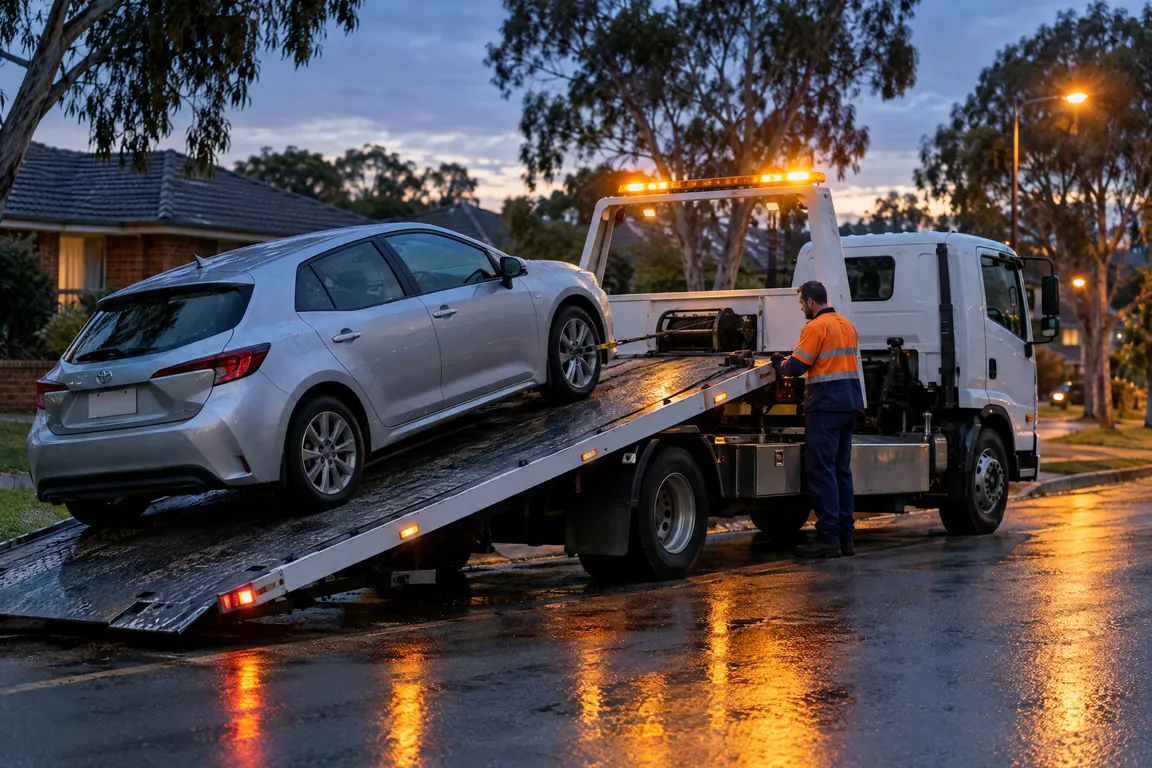
Tilt tray and flatbed
In Australia, people use "tilt tray" and "flatbed" for much the same thing: a truck with a flat deck that carries the whole vehicle. The deck tilts down to the ground, the vehicle is driven or winched on, and then the deck levels out with all the wheels off the road.
Because nothing keeps rolling, this is the safest option for most vehicles and the one to ask for if you're not sure. It particularly suits all-wheel-drive and 4WD vehicles, electric cars, low or modified cars, damaged vehicles and longer trips.
Wheel lift and hook and chain
"Hook and chain" is the old-fashioned name, and many people still use it for any tow truck that lifts one end of a vehicle while the other end rolls along behind. Modern trucks of this kind generally use a wheel lift, which cradles the tyres.
The big advantage is size. These trucks can often reach tight lanes and low car parks where a long tray can't go. The catch is that two wheels stay on the road, and that matters if those wheels are connected to the drivetrain:
- Kia's EV manual says an all-wheel-drive vehicle should never be towed with the wheels on the ground, and warns that its power electric and all-wheel-drive systems could be seriously damaged.
- Hyundai's Tucson manual recommends wheel dollies or a flatbed. For two-wheel-drive versions it allows the rear wheels on the ground with the front wheels lifted, while 4WD versions need all wheels off the ground.
Rules vary by model, so check your own owner's manual under "towing". Dollies are small wheeled platforms that go under the wheels still on the ground, which is how a wheel lift can sometimes carry a vehicle with all its wheels off the road.
Heavy tow trucks and low-loaders
Transport Victoria notes that heavy vehicles may need a heavy tow truck. That includes rigid trucks and buses, which can be beyond what a standard truck can safely move. Machinery such as excavators and bobcats is usually moved on a low-loader. If you're moving a caravan, trailer or boat, describe it clearly, including its length and whether its wheels and brakes work.
Towing a motorbike
Motorbikes need their own approach. A bike should travel upright on a tray, held with proper tie-downs and ideally a wheel chock, not dragged behind a wheel lift. It's reasonable to ask the operator how they'll secure it. Let them know whether the bike can be rolled, whether the steering is locked and whether you have the keys. If it's been dropped, mention any leaking fuel or oil too.
A quick guide
| Your vehicle | What to ask for |
|---|---|
| Front-wheel-drive car | Tilt tray or wheel lift, as your manual allows |
| All-wheel-drive or 4WD | Tilt tray, or wheel lift with dollies if your manual allows it |
| Electric car | Tilt tray (see towing an electric car) |
| Low or modified car | Tilt tray, and mention the ride height |
| Motorbike or scooter | Tray with proper tie-downs |
| Van or ute | Tilt tray or wheel lift, depending on weight and load |
| Rigid truck or bus | Heavy tow truck |
| Excavator, bobcat or other plant | Low-loader |
Five things the operator needs to know
- Make, model and drive type. Front, rear or all-wheel drive, and whether it's electric.
- Whether it rolls and steers. Flat tyres, a stuck park brake or a car that won't go into neutral all change the job.
- Whether you have the keys.
- What's around it. A low basement ceiling, a tight lane or soft ground can decide which truck can reach it.
- What's in or on it. A heavy load of tools or a hitched trailer matters.
How this works on RoadM8
When you request a tow on RoadM8, you choose your vehicle type and add a photo, so operators with the right truck can quote. The request form doesn't have a notes box yet, so if your vehicle needs a particular truck, raise it with the operator once you've accepted their quote. Call them from the tracking screen where a number is shown, and always before your vehicle is loaded. If the truck that turns up isn't right, say so before it's hooked up. If the tow is cancelled before pick-up, you're refunded in full.
Requests can come from anywhere in Victoria, including Ballarat and Bendigo. Quotes depend on who's available near your pick-up, and that includes which trucks they run.
Sources
Checked on 3 Nov 2026. Rules and prices change, so check the source if it matters for your situation.
Keep reading
Towing an electric car in Victoria: what to know before the truck arrives
Why most EVs need a flatbed, what the owner's manual says, what to tell the operator, and what to do if you've run out of charge.
Read the guideCostHow much does a tow truck cost in Victoria?
Why breakdown tows have no set price, what pushes a quote up or down, and the questions to ask before you say yes.
Read the guideRulesAbandoned car in Victoria: who can tow it away?
Who deals with an abandoned car on a road or on private land, what councils can do, and how to move your own unregistered car.
Read the guide